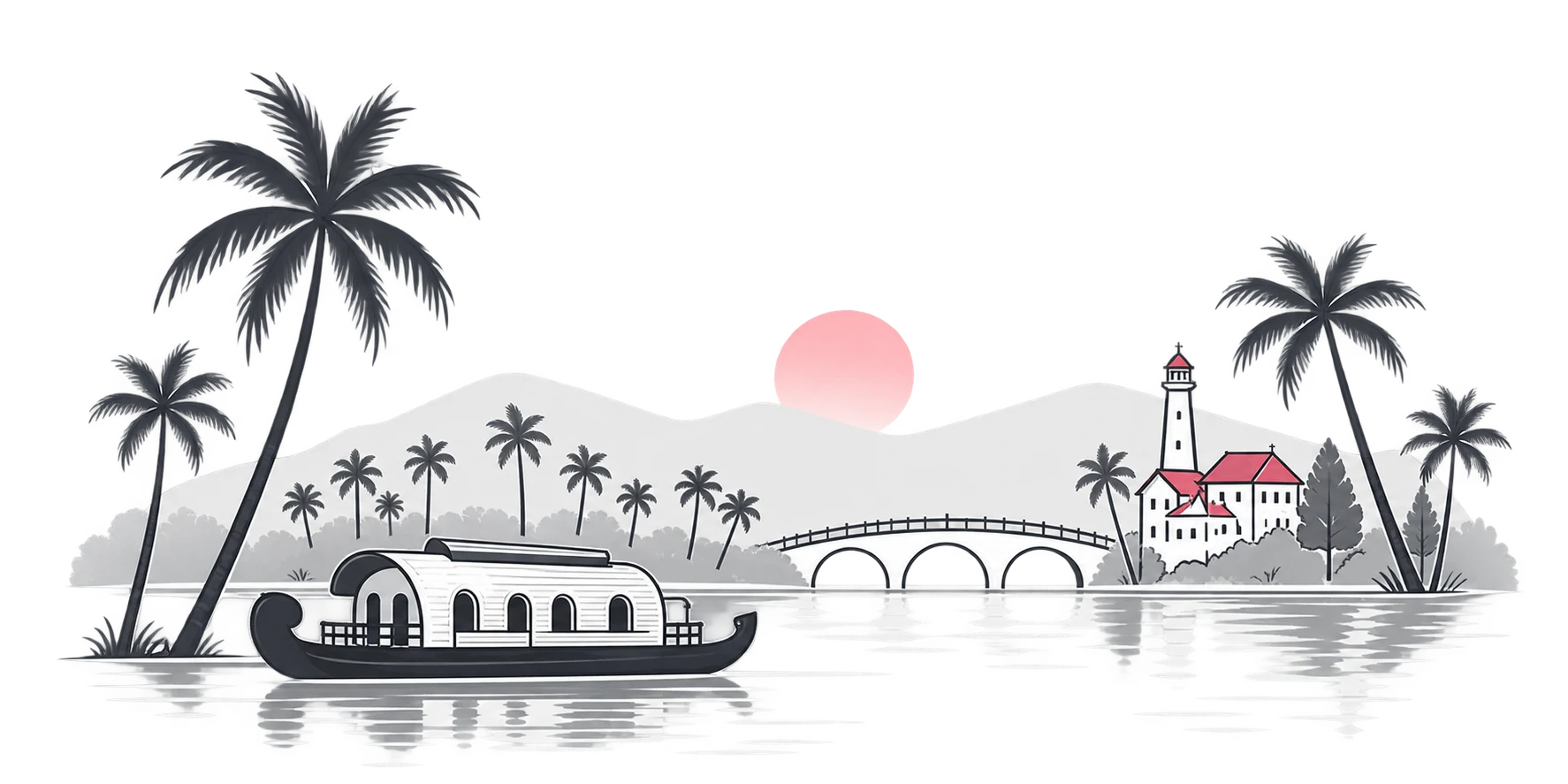
Nestled in the quiet backwaters of Kochi, Kerala, the National Shrine Basilica of Our Lady of Ransom has stood as a beacon of Catholic faith for half a millennium. This tiny island—just six square kilometers—draws close to five million pilgrims every year. People call it the “Lourdes of Kerala,” and for good reason. What makes this place truly special is how European church traditions have woven themselves into the local culture of the Malabar Coast, creating something you won’t find anywhere else.
Right now, the basilica is celebrating its Quincentenary (500th Anniversary) Maha Jubilee (2023–2025). At the heart of it all is “Vallarpadathamma”—the Mother who lives in Vallarpadam. And here’s what’s remarkable: she’s revered not just by Catholics, but by Hindus, Muslims, and people from all walks of life who come seeking her protection and grace.
How It All Began (1498–1524)
You can’t tell the story of Vallarpadam without talking about the Portuguese. When they arrived on these shores, they found the ancient Nasrani (St. Thomas) Christians already here. In 1524, Portuguese missionaries built a church on the island—the first in Asia dedicated to the Holy Spirit.
On Pentecost that same year, the local community joined the Latin Rite. The missionaries brought with them an icon of the Blessed Virgin Mary of Mercy from Portugal and placed it on a side altar. But something unexpected happened. Over time, people’s devotion to this image of Mary grew so strong that it eventually became the main focus of the church, overshadowing even the original dedication to the Holy Spirit.
The Flood of 1676 and an Unlikely Savior
In 1676, disaster struck. A massive flood swept through the area, destroying the church and washing the sacred portrait into the backwaters. What happened next is one of the most beautiful examples of religious harmony you’ll ever hear.
- The Discovery: Paliyath Raman Valiyachan (known as Komi Achan), who served as the Hindu Prime Minister to the Maharaja of Cochin, found the portrait floating in the water. According to legend, the painting was completely dry despite being submerged—a detail that left everyone in awe.
- The Land Donation: Deeply moved by what he’d witnessed, the Diwan donated a large piece of waterfront land for a new church. That’s where the basilica stands today.
- The Kedavilakku (Perpetual Lamp): The Hindu royal family didn’t stop there. They established a sanctuary lamp and kept it burning with oil they provided—right up until 1947. Even now, the annual feast’s High Mass won’t begin until descendants of the royal family pour oil into that lamp. It’s a tradition that’s been kept alive for centuries.
The Miracle That Changed Everything (1752)
In May 1752, something happened that would forever shape the identity of this place. A Hindu noblewoman named Meenakshi Amma, from the Nair caste, was traveling by boat with her infant son when a storm hit. Their vessel capsized. As she faced what seemed like certain death, she made a desperate vow: if Vallarpadathamma saved them, she would live as an Adima (spiritual slave) to the Mother.
Three days passed. Then the parish priest, Father Miguel Correa, had a vision telling him where to find them. When they pulled Meenakshi Amma and her son from the water, both were alive and completely unharmed. After their rescue, they were baptized as Mary and Jesudas. But here’s where it gets really interesting: the church commissioned an artist to modify the original 16th-century Portuguese portrait. They added Meenakshi Amma and her son standing right beside the Virgin Mary. You won’t find many Catholic icons anywhere in the world that include a local, indigenous figure integrated into the sacred imagery like this.
Where Two Traditions Meet
What sets this basilica apart are the rituals that bridge Christian and Hindu practices. It’s become a place where people of all faiths feel at home.
1. The Adima Ritual (Rite of Spiritual Slavery)
Fishermen and maritime workers especially practice the Adima ritual, asking the Mother for protection from the sea. Parents also “surrender” their newborns as Adimas, seeing her as a universal protector of children.
2. Choruuttu and Vidhyarambham
The church hosts traditional Indian ceremonies: Choruuttu (when a baby eats solid food for the first time) and Vidhyarambham (a child’s introduction to learning). Catholic priests perform these rites, honoring local cultural traditions that go back generations.
3. Penitential Sweeping
Following Meenakshi Amma’s example of lifelong service, pilgrims often sweep the church floors and courtyards with brooms. It’s a simple act of humility and a way to fulfill vows they’ve made.
The Building Itself
The basilica’s white facade catches your eye immediately—it’s a blend of European classical design adapted for the tropical climate.
What you’ll notice:
- Twin Towers: These 85-foot towers aren’t just for show. They’ve served as landmarks for sailors navigating the backwaters. Modern lifts take you to the top, where you can see the Kochi backwaters stretching out to meet the Arabian Sea.
- Rosary Park: An oval garden filled with sculptures depicting the mysteries of the Rosary.
- The Privileged Altar: Inside, this is where you’ll find the composite portrait of Vallarpadathamma, protected behind glass and surrounded by gold-leaf decorations.
Official Recognition Over the Years
The church and government have recognized Vallarpadam’s importance through various official declarations:
| Year | Recognition | Significance |
|---|---|---|
| 1888 | Altare Privilegiatum | Pope Leo XIII elevated the main altar to a “privileged” status. |
| 1951 | Major Pilgrimage Center | Designated by the Union Government of India. |
| 2004 | National Shrine | Declared by the Catholic Bishops Conference of India (CBCI). |
| 2004 | Minor Basilica | Conferred by His Holiness Pope John Paul II. |
The 500th Anniversary Celebrations (2023–2025)
The current anniversary celebrations mark a historic moment for the shrine. Some highlights worth mentioning:
- The Water Procession (Sept 2024): Over 20 decorated boats carried the sacred icon through the backwaters, blessing the maritime communities along the way.
- Beatification of Mother Eliswa (Nov 2025): Scheduled for November 8, 2025, this ceremony will elevate Venerable Mother Eliswa—India’s first indigenous Catholic nun and founder of the CTC congregation—to “Blessed” status.
- Global Alignment: These celebrations coincide with Pope Francis’s 2025 Jubilee of Hope, putting Vallarpadam at the center of spiritual renewal across Asia.
Planning Your Visit
The annual feast runs from September 16 to 24, with September 24th—the feast of Our Lady of Ransom—being the most important day.
Mass Schedule
| Day | Mass Timings |
|---|---|
| Weekdays | 6:30 AM, 5:30 PM |
| Saturdays (Novena Day) | 6:30 AM, 10:30 AM, 4:30 PM, 6:00 PM (English) |
| Sundays | 6:00, 7:00, 8:00, 9:30, 11:30 AM; 4:00 PM (Tamil), 5:30 PM |
Getting There
- By Road: The Goshree Bridges connect the island to the Ernakulam mainland.
- By Rail: About 7 km from Ernakulam Junction (South).
- By Air: Cochin International Airport (COK) is 35 km away.
- By Water: Ferries run every 30 minutes from Ernakulam Main Jetty to Vypin. From there, it’s a short walk to the basilica.
A Living Testament
The National Shrine Basilica of Our Lady of Ransom is more than just a church. It’s proof that faith can bring people together across religious lines. From the miraculous survival of the icon in 1676 to Meenakshi Amma’s rescue, this place has witnessed moments that defy explanation. As the 500th-anniversary celebrations wind down in 2025, millions continue to seek the maternal protection of Vallarpadathamma on these shores where the backwaters meet the Arabian Sea.